

The process of hosting a virtual event involves planning, executing, and delivering an engaging online experience that connects attendees from anywhere in the world. It covers everything from choosing the right platform to keeping your audience engaged throughout. Done well, virtual events can match—or even exceed—the impact of in-person gatherings.
Here’s the reality: virtual events are not just “physical events on a screen.” They demand a completely different strategy. Attendees are surrounded by distractions, multitasking is easy, and leaving the event takes just one click. At the same time, there are powerful advantages—zero travel, global accessibility, and flexible participation. The key to success lies in understanding and balancing these trade-offs.
Table of Contents
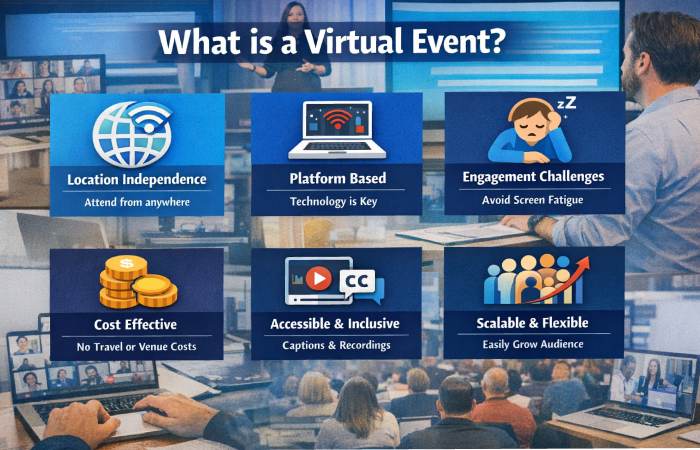
Key Characteristics of Virtual Events
Virtual events have distinct features that set them apart from traditional formats. Understanding these helps you design better experiences.
| Characteristic | Description | Impact on Event Strategy |
|---|---|---|
| Location Independence | Attendees can join from anywhere with internet access | Enables global reach and diverse audiences |
| Platform Dependency | Event success depends heavily on chosen technology | Requires careful platform selection |
| Engagement Challenges | Screen fatigue and distractions reduce attention span | Demands frequent interaction |
| Cost Efficiency | No venue, catering, or travel expenses | Budget shifts to tech and production |
| Accessibility Options | Features like captions and recordings improve inclusivity | Expands audience participation |
| Scalability | Easily increase attendee count without major cost | Supports large-scale events |
In essence, virtual events provide unmatched scalability and accessibility—but require intentional engagement strategies to succeed.
What is Virtual Event?
A virtual event is an online gathering where participants connect and engage in real-time or asynchronously via digital platforms such as live streams, video calls, and interactive tools, replicating aspects of in-person events.
These events use technologies like live streaming, video conferencing, chat rooms, and virtual networking spaces to replicate or enhance the experience of in-person events.
Virtual Events vs. Related Event Types
Not all online events are the same. Choosing the right format is critical to achieving your goals.
Comparison
| Event Type | Scope | Focus | Timeline | Interaction Style | Primary Goal |
|---|---|---|---|---|---|
| Webinars | Single-session | Education / Lead generation | 30–90 minutes | Mostly one-way + Q&A | Share knowledge or generate leads |
| Hybrid Events | Physical + Virtual | Reach + personal experience | Hours to days | Mixed | Serve local & remote audiences |
| Virtual Conferences | Multi-session, multi-day | Learning + networking | 1–3+ days | Highly interactive | Replicate full conference experience |
A simple webinar works well for product demos or training sessions. Virtual conferences are better suited for large-scale networking and industry engagement. Hybrid events combine both worlds but require more coordination.
Essential Virtual Event Components1. Choosing the Right Platform
Your platform is your venue, stage, and infrastructure combined. It determines how smoothly your event runs.
| Feature | Why It Matters |
|---|---|
| Breakout Rooms | Enables small group discussions |
| Live Chat | Encourages real-time interaction |
| Polling Tools | Keeps audience engaged |
| Recording Capability | Extends content lifespan |
| Scalability | Handles large audiences without lag |
A simple, user-friendly platform often outperforms a complex one. Always align your choice with your audience’s technical comfort level.
2. Building a Strong Content Strategy
Virtual audiences have shorter attention spans. Content must be concise, dynamic, and interactive.
| Content Type | Best Use Case |
|---|---|
| Short Presentations | Deliver focused insights quickly |
| Panel Discussions | Offer diverse perspectives |
| Workshops | Encourage hands-on learning |
| Pre-recorded Content | Acts as backup and ensures consistency |
Aim for 20–30 minute sessions and vary formats to maintain interest.
3. Creating Engagement Opportunities
Passive viewing leads to drop-offs. Engagement should be built into every part of your event.
| Engagement Tool | Purpose |
|---|---|
| Live Polls | Instant audience feedback |
| Q&A Sessions | Direct interaction with speakers |
| Chat Discussions | Peer-to-peer engagement |
| Networking Rooms | Relationship building |
| Gamification | Boosts participation and retention |
Plan interaction every 5–10 minutes to maintain attention.
4. Planning Technical Setup
Technology can make or break your event. Preparation is critical.
| Requirement | Recommendation |
|---|---|
| Internet | Use wired connection for stability |
| Audio | Invest in high-quality microphones |
| Video | Ensure proper lighting setup |
| Backup Systems | Keep alternate devices ready |
| Support Team | Provide real-time technical assistance |
Testing everything multiple times is non-negotiable.
5. Designing the Attendee Journey
From registration to follow-up, every touchpoint shapes the attendee experience.
| Stage | Key Actions |
|---|---|
| Registration | Keep it simple and quick |
| Pre-event | Send reminders and instructions |
| During Event | Provide clear navigation |
| Post-event | Share recordings and gather feedback |
A seamless journey improves satisfaction and retention.
The Virtual Event Planning Timeline
Timeline Breakdown
| Phase | Timeframe | Key Activities |
|---|---|---|
| Foundation | 8–12 weeks before | Define goals, choose platform, book speakers |
| Build & Promote | 4–8 weeks before | Launch marketing, develop content |
| Refine & Test | 1–4 weeks before | Conduct rehearsals, finalize details |
| Event Execution | Event day | Monitor, engage, troubleshoot |
| Post-Event Follow-up | After event | Share recordings, analyze data |
Detailed Explanation
Planning starts with defining success. Are you aiming for lead generation, brand awareness, or community engagement? Every decision—from platform to content—should align with this goal.
Promotion is equally important. Even the best event fails without attendees. Use email campaigns, social media, and partnerships to drive registrations.
Testing ensures reliability. Conduct full rehearsals with speakers and moderators to eliminate surprises.
Execution requires coordination. Assign clear roles for technical support, moderation, and speaker management.
Post-event follow-up is where long-term value is created. Sharing recordings and analyzing performance helps improve future events.
Why Hosting Virtual Events Matters
Benefits for Event Success
| Benefit | Description |
|---|---|
| Expanded Reach | Global audience access |
| Lower Barriers | No travel or cost constraints |
| Rich Data | Track engagement metrics |
| Content Longevity | Reusable recordings |
| Sustainability | Reduced environmental impact |
Benefits for Business Objectives
| Objective | Outcome |
|---|---|
| Cost Savings | Reduced operational expenses |
| Lead Generation | Capture attendee data |
| Brand Building | Establish authority |
| Community Growth | Build stronger networks |
| Revenue Opportunities | Monetize through tickets or sponsorships |
Virtual events are not just cost-effective—they are data-driven and scalable, making them highly valuable for modern businesses.
Best Practices for Hosting Virtual Events
| Best Practice | Explanation |
|---|---|
| Set Clear Goals | Define measurable outcomes |
| Understand Your Audience | Tailor content and timing |
| Keep Sessions Short | Prevent fatigue |
| Prioritize Audio Quality | Ensure clear communication |
| Add Interaction | Maintain engagement |
| Rehearse Thoroughly | Avoid technical issues |
| Prepare Backup Plans | Handle unexpected problems |
| Communicate Clearly | Provide instructions and reminders |
| Assign Roles | Ensure smooth execution |
| Follow Up Quickly | Maintain engagement post-event |
Common Virtual Event Mistakes
| Mistake | Consequence | Solution |
|---|---|---|
| Ignoring Time Zones | Reduced attendance | Offer flexible timing |
| Overloaded Agenda | Audience fatigue | Focus on quality |
| Skipping Rehearsals | Technical failures | Conduct full tests |
| Poor Engagement | Drop-offs | Add interactive elements |
| Weak Audio Setup | Unprofessional experience | Invest in audio quality |
| Lack of Promotion | Low turnout | Start early marketing |
| No Backup Plans | Event disruption | Prepare contingencies |
Final Thoughts
Virtual events have evolved from a temporary solution into a permanent and powerful way to connect, educate, and engage audiences worldwide. They remove geographical barriers, reduce costs, and provide measurable insights that traditional events often cannot.
However, success in virtual events requires intentional design. It’s not about replicating in-person experiences—it’s about reimagining them for a digital environment. Engagement must be proactive, technology must be reliable, and content must be concise and compelling.
