
Table of Contents
Introduction
Influencer marketing has transformed from a trendy Instagram tactic into one of the most powerful performance-driven marketing channels in the digital economy. Consumers no longer rely solely on traditional advertising. Instead, they trust creators, industry experts, and niche content leaders who build authentic relationships with their audiences.
As privacy regulations limit third-party tracking and paid ads become more expensive, influencer marketing offers a trust-first, community-based growth engine. Whether you’re a startup, D2C brand, SaaS company, or enterprise organization, a structured influencer marketing strategy can deliver measurable ROI.
This long-form guide explains influencer marketing using Experience, Expertise, Authoritativeness, and Trustworthiness principles while providing actionable frameworks, tables, pricing insights, agencies in India and the USA, real examples, and career salary data.
What Is Influencer Marketing?
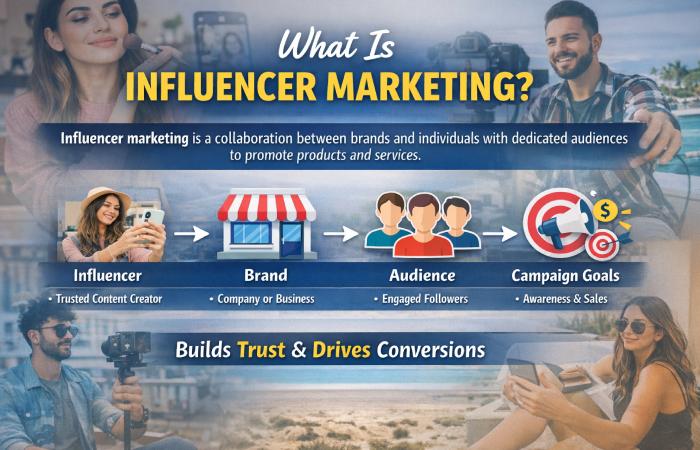
Influencer marketing is a strategic collaboration between brands and individuals who have built authority and audience trust on digital platforms. Unlike celebrity endorsements, influencer marketing leverages community-driven influence. These creators may operate on:
- YouTube
- TikTok
- Blogs
- Podcasts
Influencer Marketing vs Traditional Advertising
| Feature | Influencer Marketing | Traditional Ads |
| Trust Level | High | Low |
| Engagement | Interactive | One-way |
| Targeting | Community-based | Broad demographic |
| Cost Flexibility | Scalable | Often expensive |
| Content Ownership | Shared | Brand-controlled |
Types of Influencers: By Size and Reach
Influencers are categorized based on audience size and engagement rate.
Influencer Size Breakdown
| Tier | Followers | Engagement Rate | Best For | Cost Level |
| Nano | 1K–10K | 5–10% | Local brands | Low |
| Micro | 10K–100K | 3–7% | D2C, startups | Moderate |
| Macro | 100K–1M | 2–5% | Scaling brands | High |
| Mega | 1M+ | 1–3% | Enterprise | Premium |
Detailed Comparison by Impact
| Criteria | Nano | Micro | Macro | Mega |
| Audience Trust | Very High | High | Moderate | Moderate |
| Conversion Potential | Strong | Strong | Moderate | Awareness-focused |
| Brand Fit Flexibility | High | High | Medium | Low |
| Campaign Scalability | Limited | Good | Strong | Massive |
Micro and nano influencers often outperform mega influencers in ROI due to higher engagement and niche authority.
Why Use Influencer Marketing?
Influencer marketing delivers results because it aligns with how modern consumers make decisions.
Benefits Table
| Benefit | Explanation | Business Impact |
| Authenticity | Feels like recommendation | Higher trust |
| Engagement | Likes, shares, comments | Strong brand recall |
| Niche Reach | Targeted communities | Efficient spending |
| Content Creation | Reusable user content | Low production cost |
| Social Proof | Visible endorsements | Boosts credibility |
ROI Comparison Table
| Channel | Average ROI Potential | Scalability | Cost Control |
| Influencer Marketing | High | Flexible | High |
| Google Ads | Moderate | High | Variable |
| Facebook Ads | Moderate | High | Increasing cost |
| TV Ads | Low (for SMEs) | Limited | Expensive |
How To Create An Influencer Marketing Strategy
A successful strategy is structured and data-driven.
Step-by-Step Strategy Framework
Define Campaign Goals
| Goal Type | KPI | Example |
| Awareness | Reach, Impressions | 500K impressions |
| Engagement | Comments, Shares | 5% engagement rate |
| Leads | Form submissions | 1,000 leads |
| Sales | Conversions | 300 purchases |
Identify Target Audience
| Criteria | Questions to Ask |
| Age | 18–25 or 30–45? |
| Gender | Male, female, mixed? |
| Location | India, USA, global? |
| Interests | Fashion, tech, fitness? |
| Buying Power | Budget vs premium? |
Influencer Evaluation Matrix
| Factor | What to Check |
| Engagement Rate | Above 3% ideal |
| Fake Followers | Use audit tools |
| Content Quality | Professional & aligned |
| Brand Fit | Shared values |
| Past Collaborations | Competitor conflicts |
Budget Planning
| Budget Component | Allocation % |
| Influencer Fees | 60% |
| Agency Fees | 15% |
| Paid Amplification | 15% |
| Tools & Tracking | 10% |
Contract Essentials
| Clause | Purpose |
| Deliverables | Number of posts |
| Timeline | Publishing schedule |
| Payment Terms | Milestones |
| Usage Rights | Ad repurposing |
| Exclusivity | Competitor restriction |
Influencer Marketing Mistakes to Avoid
| Mistake | Consequence | Solution |
| Choosing by followers only | Low ROI | Analyze engagement |
| No written agreement | Legal risk | Formal contracts |
| No tracking links | No ROI clarity | Use UTM & codes |
| One-time campaigns | No brand loyalty | Long-term partnership |
| Over-controlling content | Poor authenticity | Allow creative freedom |
How to Track Influencer Marketing Campaigns
Tracking ensures profitability.
Performance Metrics
| Metric | Definition | Importance |
| Reach | Unique viewers | Awareness |
| Impressions | Total views | Visibility |
| Engagement Rate | Interactions ÷ Followers | Audience interest |
| CTR | Click-through rate | Traffic measure |
| Conversion Rate | Sales ÷ Clicks | Revenue impact |
| ROI | Revenue ÷ Cost | Profitability |
Create a Successful Influencer Marketing Strategy for Your Brand
Long-term success depends on:
| Strategy Element | Why It Works |
| Ambassador Programs | Builds loyalty |
| Multi-platform Content | Increases exposure |
| Performance Bonuses | Motivates influencers |
| Data Optimization | Improves ROI |
| Community Engagement | Strengthens trust |
Brands that build influencer ecosystems outperform those running isolated campaigns.
Influencer Marketing Agency
Working with agencies simplifies scaling.
Leading Agencies
| Agency | Country | Specialty |
| Chtrbox | India | Data-backed campaigns |
| Pulpkey | India | Storytelling-driven |
| The Influencer Marketing Factory | USA | TikTok & Gen Z |
| Obviously | USA | Enterprise campaigns |
Influencer Marketing Example
One of the most cited examples is the strategy used by Daniel Wellington.
Campaign Breakdown Table
| Strategy Element | Implementation |
| Product Gifting | Free watches |
| Discount Codes | Personalized codes |
| Aesthetic Branding | Minimalist photos |
| Micro Influencers | Thousands globally |
| UGC Repurposing | Website + Ads |
Result: Massive brand awareness and global scaling with minimal traditional advertising.
Influencer Marketing Agency in India and USA
Market Comparison
| Factor | India | USA |
| Market Growth | Rapid | Mature |
| Budget Size | Moderate | Large |
| Platform Dominance | Instagram, YouTube | TikTok, YouTube |
| Agency Cost | Affordable | Premium |
Influencer Marketing Prices in India and USA
Pricing Table
| Influencer Tier | India (Per Post) | USA (Per Post) |
| Nano | ₹2,000–₹10,000 | $100–$500 |
| Micro | ₹10,000–₹50,000 | $500–$5,000 |
| Macro | ₹50,000–₹5,00,000 | $5,000–$50,000 |
| Mega | ₹5,00,000+ | $50,000+ |
Prices vary based on industry, exclusivity, and usage rights.
Influencer Marketing Jobs with Salary
The influencer marketing industry is creating strong career opportunities.
Job & Salary Comparison
| Role | India Salary (Annual) | USA Salary (Annual) | Experience Required |
| Executive | ₹3–6 LPA | $45K–$65K | 0–2 yrs |
| Manager | ₹8–18 LPA | $70K–$120K | 3–6 yrs |
| Strategist | ₹10–20 LPA | $80K–$130K | 5+ yrs |
| Outreach Specialist | ₹4–8 LPA | $50K–$75K | 1–3 yrs |
Skills Required
| Skill | Importance |
| Social Media Analytics | High |
| Negotiation | High |
| Content Strategy | High |
| Communication | Essential |
| Data Analysis | Critical |
Conclusion
Influencer marketing is no longer optional — it has become a strategic necessity for modern digital growth. Brands that achieve consistent success in this space prioritize data-backed influencer selection, establish clear KPIs with measurable tracking systems, invest in long-term partnerships rather than one-off promotions, focus on authentic storytelling that resonates with audiences, and maintain transparent reporting to ensure accountability and ROI clarity.
FAQs
1. Is influencer marketing suitable for small businesses?
Yes. Nano and micro influencers offer affordable, high-ROI campaigns.
2. What is the ideal budget for beginners?
In India: ₹50,000–₹1,00,000.
In the USA: $3,000–$10,000.
3. How long should campaigns run?
Minimum 3 months for measurable ROI.
4. How do brands prevent fake followers?
Use influencer audit tools and check engagement consistency.
5. Is influencer marketing a good career?
Yes. It’s a rapidly growing digital marketing specialization with competitive salaries.
