
Promoting a product online has become the backbone of modern business growth. In today’s digital-first world, customers discover, evaluate, and purchase products through online channels more than ever before. This shift has made online marketing not just an option, but a necessity for businesses that want to stay competitive and relevant.
Unlike traditional marketing, online promotion allows brands to reach a global audience, personalize communication, and measure results in real time. However, success doesn’t come from randomly posting content or running ads—it comes from a well-structured strategy that aligns with customer behavior, technology, and speed.
This guide explores what online marketing is and provides a practical, structured approach to effectively promote your product online.
Table of Contents
What is Online Marketing?
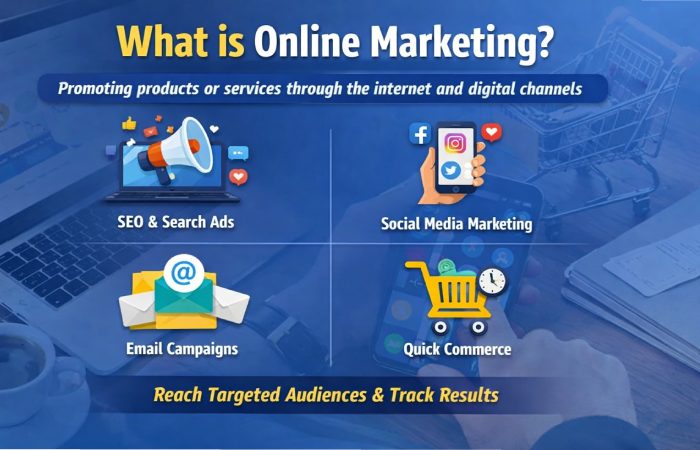
Online marketing, also known as digital marketing, refers to the process of promoting products or services using internet-based platforms such as search engines, websites, social media, and email. It enables businesses to connect with potential customers where they spend a significant portion of their time—online.
It is not limited to one method but rather a combination of strategies that work together to drive visibility, engagement, and conversions. These strategies include search engine optimization, paid advertising, content marketing, email campaigns, and influencer collaborations.
What makes online marketing particularly powerful is its ability to target specific audiences and track performance with precision. Businesses can identify what works, optimize campaigns instantly, and scale results efficiently.
Core Features of Online Marketing
| Feature | Explanation |
|---|---|
| Global Accessibility | Reach customers across different regions without physical presence |
| Measurable Performance | Track user actions, conversions, and campaign success |
| Cost Efficiency | Lower investment compared to traditional channels |
| Targeted Reach | Focus on specific audiences based on behavior and demographics |
| Real-Time Optimization | Adjust campaigns instantly based on performance data |
How to Market Your Product Online?
Marketing a product online requires a structured and consistent approach. Each step builds on the previous one, creating a system that drives sustainable growth.
1. Know Your Target Audience
Every successful marketing strategy begins with understanding the target audience. Without clarity about who your customers are, even the most creative campaigns can fail to deliver results.
A strong audience understanding includes analyzing demographics, preferences, challenges, and purchasing behavior. When businesses align their messaging with customer needs, they naturally increase engagement and conversions. Instead of trying to reach everyone, focusing on the right audience ensures efficiency and better outcomes.
Audience Insights Framework
| Aspect | Description |
|---|---|
| Demographics | Age, gender, location, and income level |
| Behavior Patterns | Buying habits and browsing behavior |
| Interests | Hobbies, preferences, and lifestyle choices |
| Pain Points | Problems your product is solving |
| Platforms Used | Where the audience spends time online |
2. Build a Professional Website
A professional website acts as the central hub of your online marketing efforts. It is where potential customers land after discovering your product through ads, social media, or search engines.
A well-designed website builds credibility and encourages users to take action. It should be easy to navigate, visually appealing, and optimized for both desktop and mobile devices. Speed and simplicity play a crucial role in keeping users engaged, while clear product descriptions and calls-to-action guide them toward making a purchase.
Essential Website Components
| Component | Role in Marketing |
|---|---|
| Responsive Design | Ensures usability across devices |
| Fast Loading Speed | Reduces drop-offs and improves experience |
| SEO Optimization | Increases visibility on search engines |
| Clear Navigation | Helps users find information quickly |
| Strong Call-to-Action | Encourages conversions |
3. Leverage Social Media Marketing
Social media platforms have transformed how businesses interact with their customers. Instead of one-way communication, brands can now engage directly with their audience, build relationships, and create communities.
Effective social media marketing involves consistent content creation, storytelling, and interaction. Rather than focusing only on promotions, businesses should provide value through informative, entertaining, or relatable content. This approach builds trust and keeps the audience engaged over time.
Social Media Platform Usage
| Platform | Primary Use Case |
|---|---|
| Visual storytelling and brand awareness | |
| Community engagement and advertising | |
| Professional networking and B2B marketing | |
| YouTube | Video-based product education |
4. Harness the Power of Quick Commerce
Quick commerce is reshaping customer expectations by prioritizing speed and convenience. It focuses on delivering products in extremely short timeframes, often within minutes or hours.
This model is especially effective in urban markets where customers value instant gratification. By integrating quick commerce strategies, businesses can significantly improve customer satisfaction and increase repeat purchases.
Quick Commerce vs Traditional E-commerce
| Factor | Traditional E-commerce | Quick Commerce |
|---|---|---|
| Delivery Time | Several days | Minutes to hours |
| Customer Expectation | Planned purchases | Instant needs |
| Conversion Rate | Moderate | Higher due to urgency |
| Fulfillment Model | Central warehouses | Local distribution hubs |
5. Collaborate With Influencers and Affiliates
Influencer and affiliate marketing leverage existing audiences to promote products more authentically. Instead of direct advertising, these methods rely on trust built between influencers and their followers.
When customers see recommendations from people they trust, they are more likely to consider the product. This approach not only increases reach but also improves credibility and conversion rates.
Types of Influencer Collaboration
| Category | Key Advantage |
|---|---|
| Nano Influencers | Strong personal connection with audience |
| Micro Influencers | Niche targeting and higher engagement |
| Macro Influencers | Broader reach and visibility |
| Affiliate Partners | Performance-based promotion |
6. Harness the Power of Email Marketing
Email marketing remains one of the most reliable channels for nurturing leads and maintaining customer relationships. Unlike social media, where visibility depends on algorithms, email provides direct access to the audience.
Businesses can use email campaigns to inform customers about new products, special offers, and updates. Personalization plays a crucial role here, as tailored messages tend to perform significantly better than generic ones.
Email Marketing Strategy
| Email Type | Purpose |
|---|---|
| Welcome Emails | Introduce brand and set expectations |
| Promotional Emails | Highlight offers and discounts |
| Newsletters | Share updates and valuable content |
| Retargeting Emails | Recover abandoned purchases |
7. Track and Analyze Results
One of the defining advantages of online marketing is the ability to measure performance accurately. Businesses can track user behavior, identify successful strategies, and make data-driven decisions.
This continuous analysis ensures that marketing efforts remain effective and adaptable. Instead of relying on assumptions, businesses can optimize campaigns based on real data.
Key Performance Indicators
| Metric | Insight Provided |
|---|---|
| Click-Through Rate | Effectiveness of ads and content |
| Conversion Rate | Percentage of users who take action |
| Bounce Rate | User engagement on website |
| Return on Investment | Overall profitability |
8. Focus on Quick Commerce and Speed
Speed is becoming one of the most critical factors in online marketing success. Customers expect fast-loading websites, quick responses, and rapid delivery.
Businesses that prioritize speed across all touchpoints—from browsing to checkout—create a smoother user experience. This not only improves customer satisfaction but also increases the likelihood of repeat purchases.
Speed Optimization Areas
| Area | Improvement Strategy |
|---|---|
| Website Performance | Optimize images and hosting |
| Checkout Process | Reduce steps for faster transactions |
| Delivery Systems | Use localized fulfillment centers |
| Customer Support | Implement automation and chat tools |
Conclusion
Promoting a product online is a dynamic and strategic process that combines multiple channels, tools, and techniques. It requires a deep understanding of customer behavior, a strong digital presence, and continuous optimization.
Businesses that succeed in online marketing are those that focus on delivering value rather than just pushing products. By understanding the audience, building a professional website, leveraging social media, and embracing innovations like quick commerce, brands can create meaningful customer experiences.