
Table of Contents
Introduction
In today’s fast-paced digital economy, businesses—especially eCommerce brands—must deliver products quickly, accurately, and efficiently. This demand has led to the rise of fulfillment companies, which play a crucial role in supply chain management. Whether you’re a startup or an established brand, outsourcing logistics can help streamline operations and improve customer satisfaction.
A fulfillment company handles the storage, packaging, and shipping of products on behalf of a business. Instead of managing warehouses and logistics internally, companies can rely on specialized providers to ensure smooth order processing and timely delivery.
This comprehensive guide explains everything you need to know about fulfillment companies, including their services, benefits, costs, and how to choose the right one.
What is a Fulfillment Company?
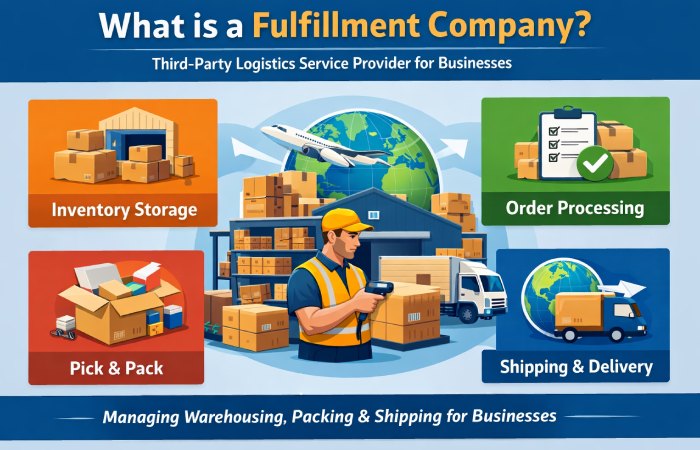
A fulfillment company is a third-party service provider that manages the logistics process for businesses. This includes storing inventory, processing orders, packing products, and shipping them to customers.
These companies are often part of broader third-party logistics (3PL) services, which cover multiple aspects of the supply chain, including warehousing, inventory management, and transportation.
Key Features of a Fulfillment Company
| Feature | Description |
| Inventory Storage | Stores products in warehouses |
| Order Processing | Picks, packs, and prepares orders |
| Shipping | Handles delivery to customers |
| Returns Handling | Manages reverse logistics |
| Technology Integration | Provides tracking and analytics |
Why Use a Fulfillment Company?
Businesses choose fulfillment companies to save time, reduce costs, and scale operations efficiently.
Outsourcing logistics allows companies to focus on core activities like marketing and product development, while experts handle shipping and inventory. Fulfillment providers also offer advanced technology and infrastructure that may be costly to build in-house.
Benefits Overview
| Benefit | Explanation |
| Cost Savings | Avoid warehouse and labor costs |
| Scalability | Easily handle growth and seasonal demand |
| Faster Shipping | Access to global shipping networks |
| Expertise | Professional logistics management |
| Customer Satisfaction | Improved delivery speed and accuracy |
What Does a Fulfillment Company Do?
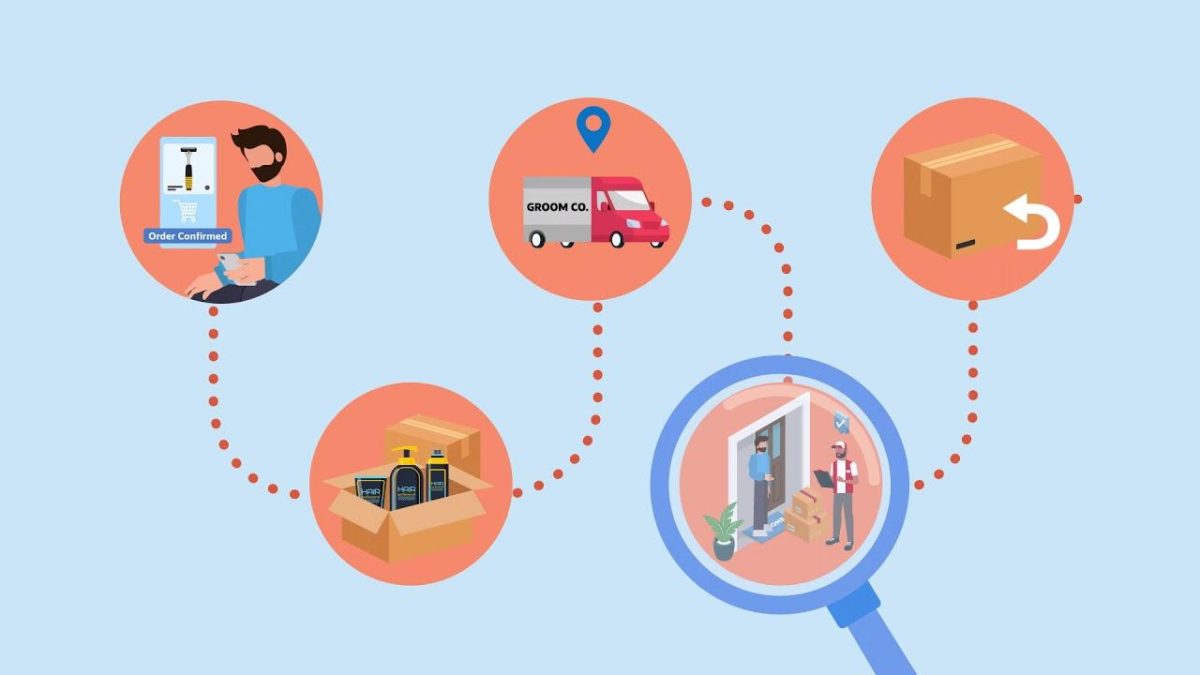
Fulfillment companies handle the entire order lifecycle:
- Receiving inventory
- Storing products in warehouses
- Picking items when orders are placed
- Packing items securely
- Shipping orders to customers
- Managing returns
These services ensure efficient supply chain operations and help businesses maintain consistency in delivery.
Do Fulfillment Companies Handle International Shipping?
Yes, most fulfillment companies support international shipping. They partner with global carriers and manage customs documentation, duties, and taxes.
Many 3PL providers also offer cross-border logistics solutions, enabling businesses to expand into global markets efficiently.
Can a Fulfillment Company Offer Custom Packaging?
Yes, many fulfillment companies provide custom packaging options such as:
- Branded boxes
- Personalized inserts
- Eco-friendly packaging
- Gift wrapping
Custom packaging enhances brand identity and improves customer experience.
Do Fulfillment Companies Provide Real-Time Order Tracking?
Modern fulfillment companies use advanced technology systems that provide real-time tracking and inventory visibility.
These systems allow businesses and customers to monitor orders at every stage—from warehouse processing to final delivery.
Do Fulfillment Companies Handle Returns?
Yes, fulfillment companies manage reverse logistics, which includes:
- Receiving returned products
- Inspecting items
- Restocking inventory
- Processing refunds or exchanges
Returns management is a critical part of maintaining customer satisfaction.
How Do Fulfillment Companies Handle Packaging and Shipping?
Fulfillment companies use optimized processes to ensure safe and efficient delivery:
| Step | Process |
| Picking | Selecting items from inventory |
| Packing | Using protective packaging materials |
| Labeling | Adding shipping labels and barcodes |
| Carrier Selection | Choosing cost-effective shipping options |
| Dispatch | Sending packages to customers |
They also use automated systems to minimize errors and improve efficiency.
What Can a Fulfillment Company Offer My Business?
A fulfillment company can provide:
- Faster delivery times
- Reduced operational workload
- Access to logistics expertise
- Improved inventory management
- Enhanced customer experience
These advantages help businesses grow without the burden of managing logistics internally.
What is a 3PL Fulfillment Company?
A 3PL (Third-Party Logistics) fulfillment company is a service provider that manages logistics operations for another business.
This includes warehousing, inventory management, order fulfillment, and shipping.
Unlike basic fulfillment providers, 3PL companies offer end-to-end logistics solutions and scalability.
3PL vs Traditional Fulfillment
| Aspect | 3PL | Traditional Fulfillment |
| Scope | Full logistics services | Limited to order fulfillment |
| Technology | Advanced systems | Basic tools |
| Scalability | High | Moderate |
| Cost Model | Flexible | Fixed |
What is an eCommerce Fulfillment Company?
An eCommerce fulfillment company specializes in handling online orders. These companies integrate with platforms like Shopify, WooCommerce, and Amazon.
They are designed to process high volumes of small orders quickly and efficiently, making them ideal for online businesses.
What is the Cost of Fulfillment Company Services?
The cost of fulfillment services varies depending on factors like order volume, storage space, and shipping requirements.
Typical Cost Breakdown
| Cost Type | Description |
| Storage Fees | Charged per pallet, bin, or square foot |
| Pick & Pack Fees | Cost per order processed |
| Shipping Fees | Carrier charges for delivery |
| Setup Fees | Initial onboarding cost |
| Returns Processing | Fees for handling returns |
3PL services often use a flexible pricing model, reducing the need for large upfront investments.
What is the Difference Between a Distribution Center and a Fulfillment Center?
A distribution center focuses on bulk storage and distribution to retailers, while a fulfillment center handles individual customer orders.
Key Differences
| Feature | Distribution Center | Fulfillment Center |
| Purpose | Bulk distribution | Order fulfillment |
| Customers | Retailers | End consumers |
| Speed | Slower | Fast processing |
| Operations | Storage-focused | Order-focused |
What is the Difference Between Warehousing and Fulfillment?
Warehousing and fulfillment are related but distinct:
| Aspect | Warehousing | Fulfillment |
| Function | Storage of goods | Processing and shipping orders |
| Focus | Long-term storage | Quick order delivery |
| Operations | Minimal handling | Active order management |
Fulfillment centers are optimized for speed, while warehouses focus on storage.
What Services Do Fulfillment Companies Offer?
Fulfillment companies provide a wide range of services:
- Inventory management
- Order processing
- Packaging and labeling
- Shipping and delivery
- Returns handling
- Custom packaging
- Real-time tracking
These services help businesses streamline operations and improve efficiency.
How to Choose a Fulfillment Company?
Choosing the right fulfillment partner is critical for business success.
Key Factors to Consider
| Factor | What to Look For |
| Location | Warehouses near your customers |
| Technology | Real-time tracking and integrations |
| Pricing | Transparent and flexible costs |
| Scalability | Ability to handle growth |
| Customer Support | Reliable and responsive service |
| Shipping Speed | Fast and reliable delivery options |
Additionally, evaluate the company’s experience, reputation, and ability to meet your specific business needs.
Conclusion
Fulfillment companies are essential partners for businesses looking to scale efficiently in today’s competitive market. By outsourcing logistics, companies can focus on growth while ensuring fast, accurate, and reliable delivery.
From inventory storage to order processing and returns management, fulfillment providers offer comprehensive solutions that simplify supply chain operations. Whether you choose a basic fulfillment provider or a full-service 3PL company, the right partner can significantly impact your business success.
As eCommerce continues to grow, leveraging fulfillment services is no longer optional—it’s a strategic necessity for staying competitive and meeting customer expectations.
