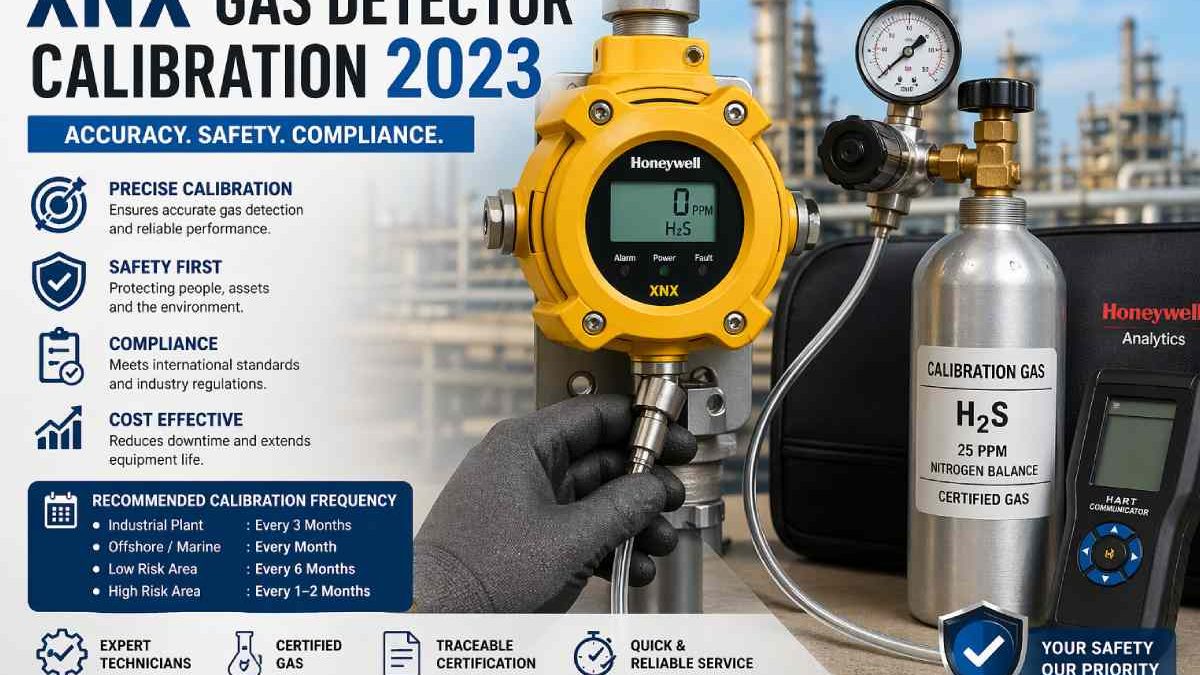
Gas detection systems are a necessity in highly dangerous industries that are prevalent in Egypt-such as oil and gas, petrochemical, fertilizers, and manufacturing, to ensure safety. One of the most commonly used solutions, the XNX gas detector is extremely reliable and capable of reading from different sensor types. Despite their capabilities, even the best detectors still need calibration.
Calibration is the process of ensuring that a gas detector’s readings are correctly correlated to known gas concentrations. Over time, the detectors become affected by environmental conditions such as heat, cold, dust accumulation, and wear and tear-in Egypt’s severe environmental conditions which can be anywhere from desert installations to offshore rigs, the detector may drift faster than average, therefore regular calibration is crucial, and not just advice.
By correctly calibrating the system, you can ensure that the gas detectors read correctly, that personnel and the installation are safe from harmful gases such as methane, hydrogen sulfide, carbon monoxide, etc. This is why all Egyptian industries follow a regular calibration procedure.
Table of Contents
Cost of XNX Gas Detector Calibration in Egypt (2023)
The costs of calibration services in Egypt vary according to the service provider, location, type of gas sensor, and the service type (field or laboratory). The prices of the calibration gases imported and used are taken into consideration too.
| Service Component | Price Range (EGP – 2023) | Details |
| Basic Calibration | 3,500 – 6,500 | Includes zero and span calibration |
| On-Site Calibration | +1,000 – 2,000 | Travel and technician charges |
| Calibration Gas Cylinder | 800 – 1,200 | Certified gas mixtures |
| Calibration Kit | 9,000 – 15,000 | One-time investment for in-house use |
| Sensor Replacement | 4,000 – 10,000 | Based on sensor type |
In most Egyptian industrial zones such as the Suez Canal Economic Zone or Alexandria’s petrochemical hubs, companies often prefer on-site calibration despite the added cost because it minimizes downtime.
Types of Sensors Used in XNX Gas Detectors
XNX gas detectors are versatile and support multiple sensor types. Each sensor is designed to detect specific gases and requires a slightly different calibration approach.
| Sensor Type | Target Gas | Calibration Method |
| Electrochemical (EC) | Toxic gases (CO, H₂S) | Span calibration with gas standard |
| Infrared (IR) | Hydrocarbon gases | Optical calibration |
| Catalytic Bead | Combustible gases | LEL (Lower Explosive Limit) calibration |
| PID Sensors | VOCs | Specialized calibration gas |
Calibration Process Explained
XNX gas detectors are calibrated in a number of set procedures, which need to be followed closely to prevent any mistakes occurring.
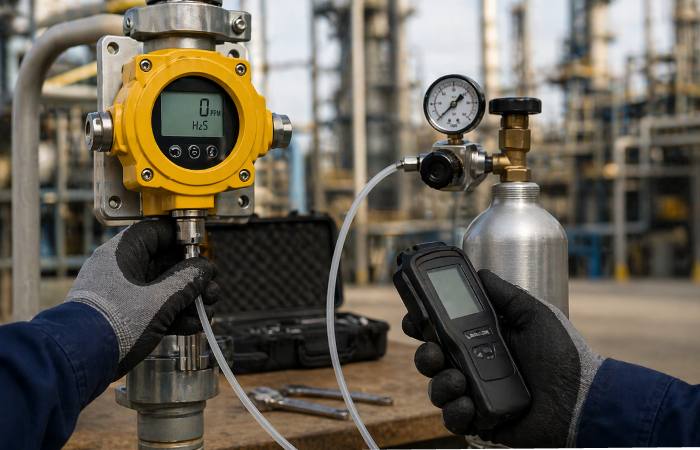
Firstly the process has to be set up. Power the device on and allow it to warm up for between 15-30 minutes while ensuring calibration gas has been prepared and that equipment is working properly.
Then the detector is placed under a clean air or zero gas and zero calibration carried out so that the device reads zero with no gas. Next span calibration is carried out where by the device is exposed to a known concentration of gas and the reading on the device is adjusted.
Finally a bump test can be carried out to check if the device is responding to the gas and alarming correctly.
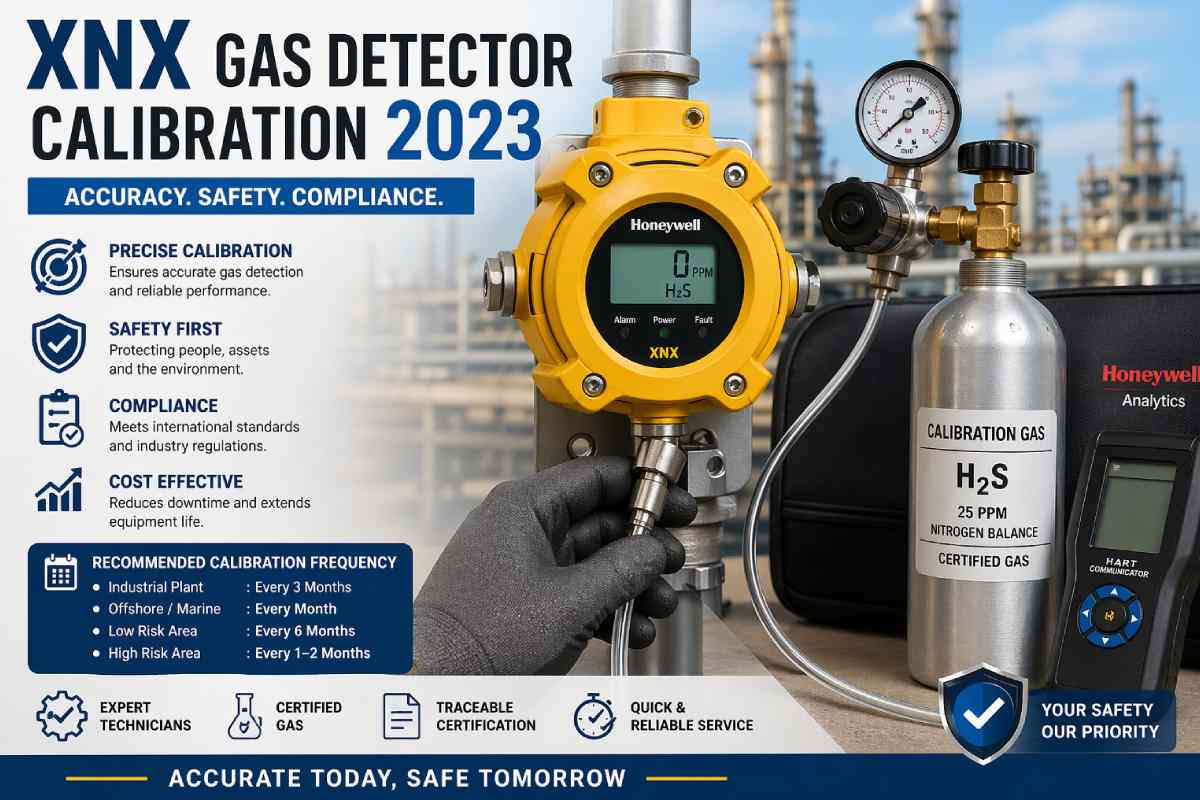
Calibration Frequency Guidelines
The frequency of calibration depends heavily on environmental conditions and industry regulations in Egypt. Facilities operating in extreme environments require more frequent calibration.
| Environment Type | Recommended Calibration Frequency |
| Clean indoor facilities | Every 6 months |
| Industrial plants | Every 3 months |
| Offshore oil & gas rigs | Monthly |
| High-risk hazardous zones | Every 1–2 months |
In Egypt, oil refineries and offshore platforms typically follow stricter schedules due to higher exposure to hazardous gases.
Equipment Required for Calibration
Accurate calibration requires certain equipment and tools. The use of high quality equipment will produce dependable results and long-term savings.
| Equipment | Function |
| Calibration Gas Cylinder | Supplies known gas concentration |
| Flow Regulator | Controls gas flow rate |
| Tubing and Adapters | Connects gas cylinder to detector |
| Calibration Kit | Complete calibration setup |
| HART Communicator | Configures and monitors detector settings |
Many Egyptian companies import calibration equipment due to limited local manufacturing, which contributes to higher costs. Accurate technical documentation is equally important when manufacturing industrial equipment and its components. Computer-aided design (CAD) drafting helps engineers prepare detailed drawings, check component specifications and identify design issues before production begins. Read more about leveraging CAD drafting to enhance quality control in production to understand how precise technical documentation can support manufacturing accuracy and consistency.
In-House vs Third-Party Calibration
Companies in Egypt often decide between performing calibration internally or outsourcing it to certified service providers. Each option has its advantages and limitations.
| Factor | In-House Calibration | Third-Party Service |
| Cost | Lower over time | Higher per visit |
| Accuracy | Depends on staff expertise | High (certified professionals) |
| Equipment | Requires investment | Not required |
| Compliance | Must be managed internally | Certification provided |
| Flexibility | Immediate access | Scheduled visits |
Large organizations typically maintain in-house calibration teams, while smaller companies rely on external service providers.
Compliance and Safety Standards
Calibration practices in Egypt are guided by international standards to ensure safety and consistency. These standards are widely adopted across industries.
| Standard | Purpose |
| ISO 17025 | Calibration accuracy and certification |
| ATEX | Equipment safety in explosive environments |
| IECEx | Global compliance for hazardous areas |
| OSHA Guidelines | Workplace safety practices |
Adhering to these standards helps companies avoid legal issues and ensures worker safety.
Challenges in Egypt
Running the gas detectors under Egyptian environment, pose a new challenge that are environmental and logistical based. High temperatures and dust will accelerate the sensors aging; need a more frequent calibration and humidity present in the costal regions will affect their readings. Another issue to deal with is availability of calibration gas and spare parts; as many components are imported it will create logistic problems that effect maintenance schedule. There are some remote industrial regions that will have problem of accessing the certified services.
Common Calibration Errors and Solutions
Even experienced technicians can make mistakes during calibration. Understanding common errors helps prevent costly failures.
| Error | Impact | Solution |
| Incorrect gas concentration | Inaccurate readings | Use certified calibration gas |
| Improper gas flow | Calibration failure | Use correct regulator |
| Skipping zero calibration | Sensor drift errors | Always perform zero step |
| Infrequent calibration | Reduced reliability | Follow schedule strictly |
Reliable calibration also depends on having trained technicians, suitable equipment and access to the correct technical information. Providing engineers with the right tools and resources can help them follow procedures consistently, identify problems and maintain industrial safety equipment effectively. Explore this guide on how to equip your engineers to learn more about supporting engineering teams in demanding industrial environments.
Benefits of Regular Calibration
Calibration should be carried out regularly in order to assure safety and workability of equipment. Accurate gas readings are important to prevent accidents. Sensors last longer if the equipment is properly calibrated and downtime can also be reduced.
Due to increasing emphasis of safety regulations within Egyptian industrial field, it helps organization to comply regulations and to prevent fine. Besides that, it helps to maintain workers confidence by guaranteeing the safety in their work place.
Future Trends in Gas Detector Calibration
Gas detection technologies are changing rapidly, and Egypt is slow to catch on to new technology. More and more automated calibration systems are being developed to decrease human contact, as well as cloud storage and wireless tracking of calibration history. Smart sensors are now being developed with self-diagnosis capabilities and an indicator for when a device needs to be calibrated.
As gas detection systems become more advanced, managing the energy consumption of electronic devices is also important. Power analysis helps engineers identify energy-intensive components and explore ways to improve efficiency without compromising essential functions. Discover more about maximizing gadget battery life via power analysis to learn how power measurement can support better energy management in electronic devices.
Conclusion
Calibrating a XNX gas detector is essential for ensuring the safety of workers within industry in Egypt. While this investment can be as high as EGP 3,500 and EGP 6,500 in 2023, it is necessary to ensure worker safety and the use of international standards for working within this country. By keeping good maintenance records, carrying out correct calibrations, and using the recommended calibration periods companies will be able to ensure reliable readings and continued safe working conditions. Regardless of whether the calibration is carried out in house or by a third party, calibration of a gas detector is always an integral part of ensuring safety in the country’s industrial environment.