Table of Contents
Introduction
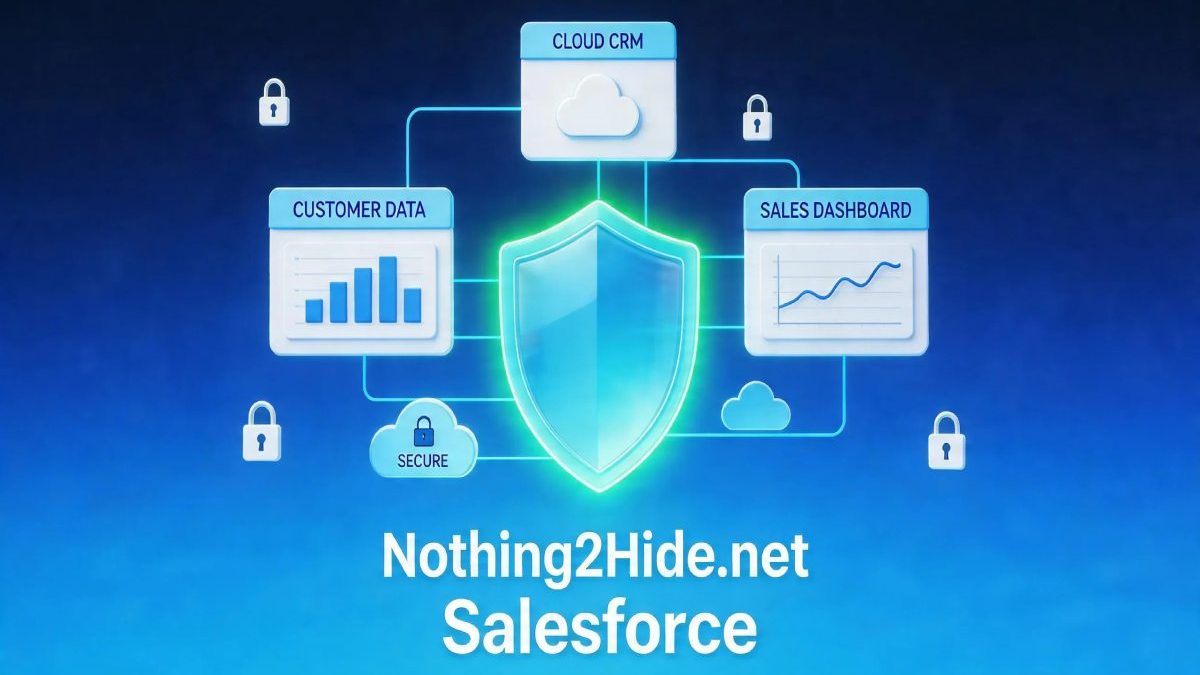
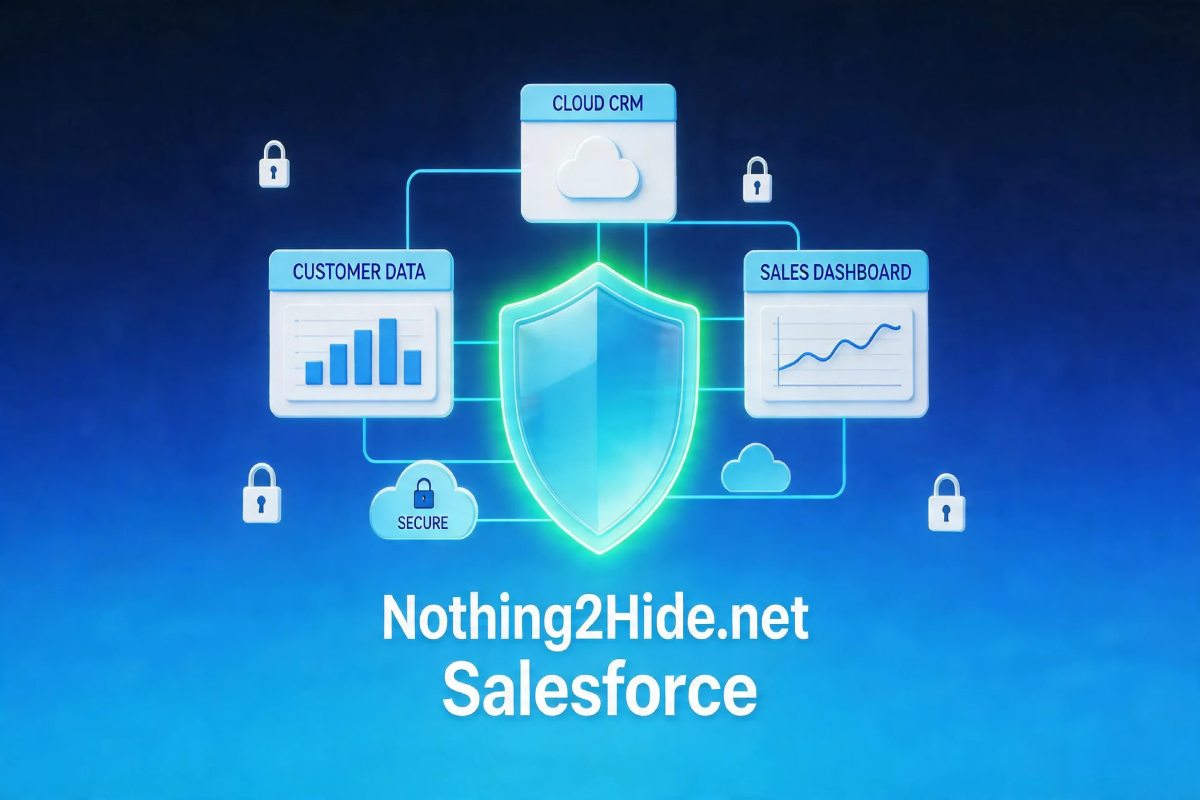
Today’s American business world is not a place for options; transparency and data responsibility are a requirement. It appears from the word “www.nothing2hide Salesforce,” that there’s a new direction within American business, where ethical data management is incorporated within strong customer relationship management technology. Salesforce, America’s premier CRM solution, stands at the front of this new revolution.
Today, businesses have to manage tons of data from their clients, from names, addresses and to their buying habits. Given the rise of privacy concerns and legislation regarding privacy, businesses are now expected to openly share information about their clients’ data collection, storage and usage. A ‘nothing to hide’ environment is not only the goal but also a feasible one through the capabilities offered by Salesforce.
Understanding the “Nothing2Hide” Concept

The concept is quite straightforward: companies must be transparent, honest and responsible in the ways they manage data. For those using Salesforce, this means visibility into how customers’ data is being handled, keeping it safe and secure, and meeting compliances rules.
In the U.S., for instance, the CCPA is already forcing data handling practices to change, and soon this will be just a mandatory aspect of business. If data handling is done well – through the display of your policy, and through providing the user with access to personal data, trust is being given and accepted.
Therefore, rather than the business operations behind complicated systems of code, businesses that use the concept to create trust through Salesforce, bring the transparency and accessibility to the operation: give access, get consent, protect the data.
Salesforce in the USA: A Transparency Enabler
The leading provider of CRM solutions in the United States is Salesforce. The company’s cloud-based infrastructure enables businesses to manage their operations and data from a single, centralized point.
The suite provides a wide array of tools that ensure accountability at every level – data acquisition, generation of reports, etc. Organizations can see who is looking at what information, what data has been modified recently, and can generate a report of what information has been looked at.
Core Salesforce Capabilities
| Feature | Description | Business Impact |
| CRM Database | Centralized customer information | Better decision-making |
| Sales Automation | Streamlined sales processes | Increased efficiency |
| Service Tools | Customer support systems | Improved satisfaction |
| Marketing Automation | Campaign management | Higher engagement |
| Security Controls | Data protection features | Regulatory compliance |
Why Transparency Matters in the US Market
American consumers are aware and concerned about their own information. Breaches and the proliferation of data have made privacy a high priority among consumers and businesses that fail to address this concern risk their trust and may suffer the consequence of litigation. Transparency isn’t simply a legal issue; it’s what earns a consumer’s business and a commitment.
Key Drivers of Transparency
| Factor | Explanation | Outcome |
| Privacy Regulations | Laws like CCPA enforce accountability | Legal protection |
| Consumer Awareness | Customers demand openness | Stronger trust |
| Digital Growth | More online interactions | Increased data flow |
| Cyber Threats | Rising security risks | Need for safeguards |
How Salesforce Supports a “Nothing2Hide” Approach
The framework Salesforce offers supports transparent data practices quite effectively, enabling businesses to control all aspects of customer data visibility and ownership through its available features. A range of permission-based access allows the organization to limit access to particular data, while audit trails track activities for potential issue resolution and error tracing. The data itself can be protected using a set of encryption tools.
Transparency Tools in Salesforce
| Tool | Function | Benefit |
| Salesforce Shield | Advanced security monitoring | Data protection |
| Privacy Center | Consent and compliance management | Regulatory alignment |
| Audit Trail | Tracks system activity | Accountability |
| Data Mask | Protects sensitive data in testing | Risk reduction |
Implementation Strategy for US Businesses
Nothing to hide’ is not only a technical, but an organisational solution. An organisational change will lead to organisational policies, procedures, culture that enable the ‘nothing to hide ‘ strategy. Initially, clear data policies need to be defined, as in: When and how are we gathering data, where are they stored and with whom can they be shared? Subsequently, a proper environment that enables these policies has to be set up; for example, by configuring security features and automating processes within Salesforce. After that, the employees have to be trained on the significance of data privacy issues and their correct use of Salesforce. Finally, the customer also has to be communicated transparently.
Implementation Framework
| Step | Action | Result |
| Policy Creation | Define data rules | Clear guidelines |
| System Setup | Configure Salesforce | Controlled access |
| Training | Educate employees | Better compliance |
| Monitoring | Enable tracking tools | Accountability |
| Communication | Inform customers | Increased trust |
Effective implementation also depends on clear communication and teamwork. When employees understand data policies and share information responsibly, businesses can improve coordination across departments. Read this guide to flourishing in the digital collaboration landscape for practical insights into improving communication and collaboration in modern workplaces.
Industry Applications in the USA
The applications of Salesforce to promote transparency differ among various sectors in the U.S. Even though the fundamental beliefs are identical, there is flexibility in applying the beliefs according to regulations and business necessities.
In the healthcare sector, it has to operate under rigorous federal laws such as the Health Insurance Portability and Accountability Act (HIPAA). While the system helps manage and monitor the information of patients in a secured manner, transparency in communication is still achieved.
Financial institutions, for instance, use Salesforce to monitor transactions and manage risks to ensure that they have been operating within federal laws. E-commerce businesses use it to enhance the customers’ experience and also maintain proper consent forms.
Industry Use Cases
| Industry | Application | Benefit |
| Healthcare | Patient data management | Privacy compliance |
| Finance | Risk and transaction tracking | Fraud prevention |
| E-commerce | Customer analytics | Personalized experiences |
Benefits of Combining Salesforce with Transparency
Organizations that integrate Salesforce with a “nothing to hide” mindset gain significant advantages. Transparency fosters trust, which is a key driver of customer loyalty and brand reputation.
Operational efficiency also improves, as clear processes reduce confusion and errors. Additionally, compliance becomes easier, minimizing the risk of penalties and legal issues.
Key Benefits Overview
| Benefit | Description | Impact |
| Trust | Open data practices | Customer loyalty |
| Compliance | Meets legal requirements | Reduced risk |
| Efficiency | Streamlined processes | Faster operations |
| Security | Strong data protection | Safer systems |
Digital platforms also help businesses access useful information, explore technology topics and understand tools that support their online operations. For a related overview of digital content and technology resources, read this guide to the VSTechPanel.com website.
Challenges and Practical Solutions
Even with the obvious benefits, implementation of transparency is not without its difficulties. Companies face issues with enormous quantities of data, employee adoption, and security. The use of strategic planning and tools such as those of the Salesforce product range can overcome such difficulties by using automation to manage huge amounts of data and ensuring that staff are properly train.
Challenges and Solutions
| Challenge | Issue | Solution |
| Data Volume | Complex data management | Use automation |
| Compliance Costs | High investment | Scalable tools |
| Employee Awareness | Lack of knowledge | Training programs |
| Security Risks | Potential breaches | Encryption and monitoring |
Future of Salesforce and Transparency in the USA
The future of CRM in the U.S. Appears to be focus on accountability and trust. Trends in the industry, such as the use of artificial intelligence and automation, can help the U.S. Businesses to increase the ease with which they become compliant, as well as customer service levels. Businesses will begin utilizing even more enhanced security models, such as a zero-trust framework, that restricts any access to the information, and the capabilities of the U.S. Companies will continue to grow. Salesforce can also be expect to introduce new features design for increased privacy as the laws change.
Alongside CRM improvements, reliable business communication remains important for customer service and team coordination. Voice over Internet Protocol (VoIP) allows businesses to make calls using an internet connection, offering an alternative to traditional telephone systems. Explore whether VoIP is the future of telecom to learn more about its role in modern business communication.
Emerging Trends
| Trend | Description | Business Impact |
| AI Integration | Smart data analysis | Better insights |
| Privacy Automation | Automated compliance tools | Reduced workload |
| Zero Trust Security | Strict access controls | Enhanced safety |
| Advanced Analytics | Real-time reporting | Improved decisions |
Conclusion
The concept of “www.nothing2hide Salesforce” aptly describes a significant transition in the United States business landscape. Transparency is not merely an operational obligation but a competitive edge. With the functionalities of Salesforce, adopting a “nothing to hide” approach allows businesses to build trust, meet regulatory needs, and foster long-term growth. In today’s data-driven environment, transparency and accountability are fundamental for sustained prosperity.